Vietnam World Heritage Sites: Best Stunning 15-Day Tour Guide
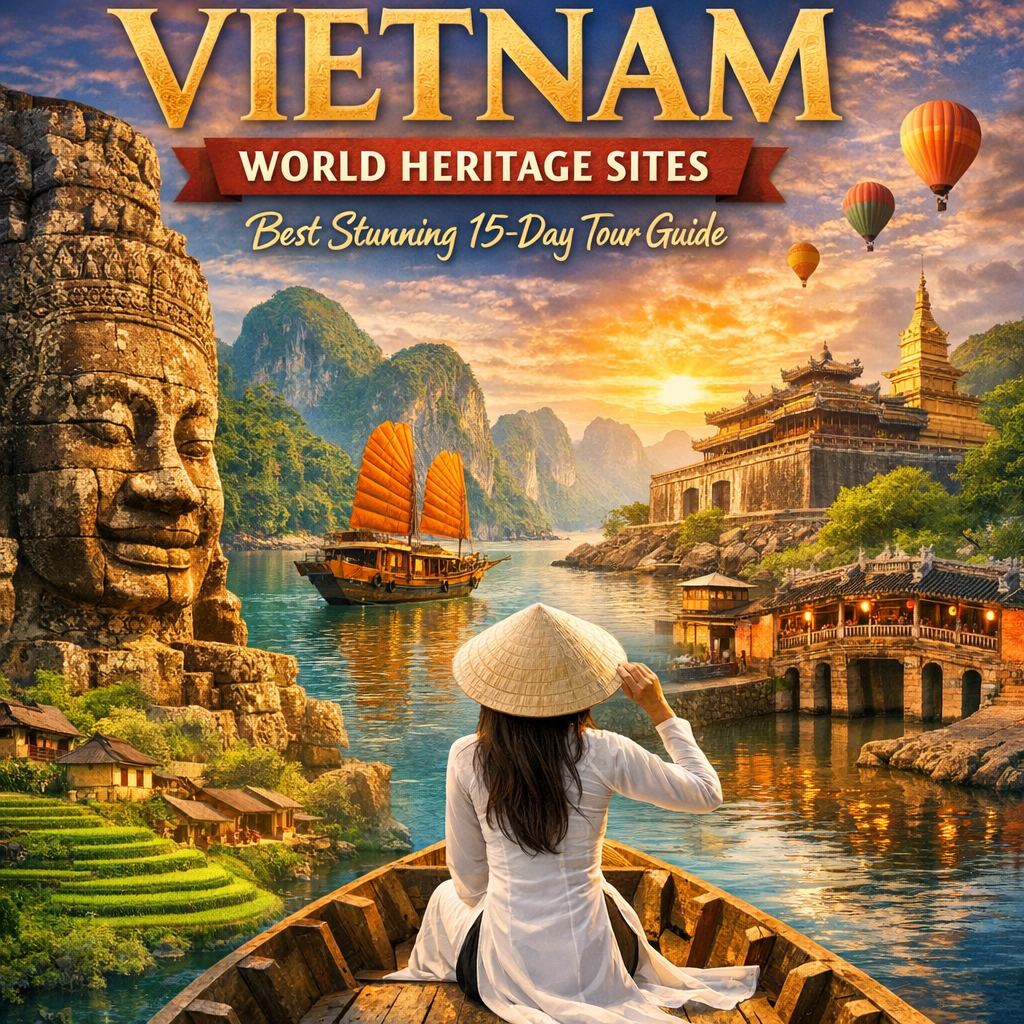
Vietnam World Heritage Sites: Best Stunning 15-Day Tour Guide
Vietnam World Heritage Sites offer a rare mix of ancient history, dramatic landscapes, sacred architecture, and living culture, making the country ideal for a memorable two-week adventure. From limestone bays and river-carved caves to imperial cities and centuries-old trading ports, Vietnam’s UNESCO-listed treasures can be linked into one rewarding 15-day route. If you want a journey that balances iconic highlights with meaningful local experiences, this guide will help you plan every step.
Why This 15-Day Route Works
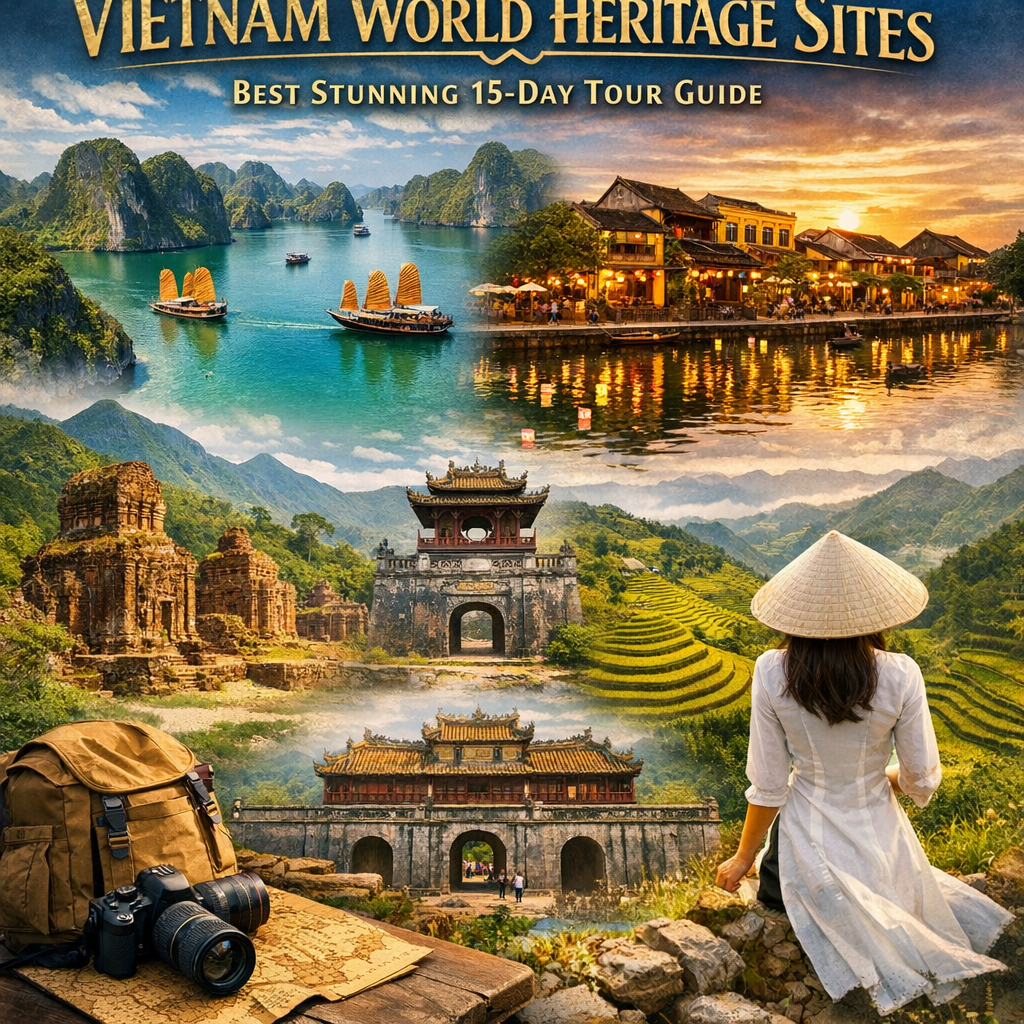
Vietnam stretches long and narrow, so a smart itinerary is essential. A 15-day plan gives you enough time to move from north to central Vietnam without feeling rushed. This route combines the country’s most celebrated heritage sites with practical travel connections, scenic stops, and space to actually enjoy each destination.
The journey typically starts in Hanoi, where you can easily access northern sites such as Ha Long Bay, Trang An, and the Imperial Citadel of Thang Long. From there, you continue to central Vietnam for Hue, Hoi An, My Son Sanctuary, and Phong Nha-Ke Bang National Park. The result is a rich travel experience that highlights Vietnam’s cultural depth and natural beauty.
Vietnam World Heritage Sites on a 15-Day Journey
Below is a balanced itinerary designed for first-time visitors who want to see the best UNESCO highlights without turning the trip into a marathon.
Days 1–2: Hanoi and the Imperial Citadel of Thang Long
Begin in Hanoi, Vietnam’s capital, where old-world charm meets modern energy. Spend your first day adjusting to the pace of the city, exploring the Old Quarter, sampling street food, and visiting Hoan Kiem Lake.
On day two, head to the Imperial Citadel of Thang Long, one of the country’s most important cultural landmarks. This UNESCO site reflects over a thousand years of political history and reveals layers of Vietnamese dynasties through archaeological remains, gates, palaces, and military structures. Pair it with a visit to the Temple of Literature and a traditional water puppet show for a deeper understanding of the capital’s heritage.
Days 3–4: Ha Long Bay Cruise
From Hanoi, travel to Ha Long Bay, one of the most famous natural wonders in Asia. The bay’s emerald waters and towering limestone karsts create a landscape that feels almost unreal. An overnight cruise is the best way to experience it.
Spend day three boarding your boat, sailing past islands, kayaking through lagoons, and watching the sunset over the bay. On day four, enjoy an early morning tai chi session on deck, explore a cave or floating village, and return to the mainland by afternoon.
If you prefer a quieter option, some travelers choose Lan Ha Bay, which offers similar scenery with fewer crowds while still connecting well with a broader heritage itinerary.
Days 5–6: Trang An Landscape Complex, Ninh Binh
Next, travel south to Ninh Binh, home to the stunning Trang An Landscape Complex. Often called “Ha Long Bay on land,” this UNESCO site combines limestone peaks, winding rivers, caves, and historic temples in one extraordinary setting.
A boat ride through Trang An is the highlight here. You will glide through cave tunnels, pass rice fields, and see temples nestled against dramatic cliffs. On the second day, climb to the viewpoint at Mua Cave for panoramic views, or explore nearby Hoa Lu, Vietnam’s ancient capital.
Trang An is ideal for travelers who want both natural beauty and cultural context. It is peaceful, photogenic, and one of the most rewarding stops on the trip.
Day 7: Transit to Dong Hoi or Phong Nha
Day seven is mainly for travel. Take a train, private car, or short flight connection depending on your preferred pace and budget. Reaching the Phong Nha area may take time, but the destination is worth it. Arrive in the evening, relax, and prepare for one of Vietnam’s greatest natural sites.
Days 8–9: Phong Nha-Ke Bang National Park
Phong Nha-Ke Bang National Park is a dream destination for nature lovers and adventure travelers. Recognized by UNESCO for its geological value, the park is known for ancient karst formations, underground rivers, and enormous cave systems.
On day eight, visit Phong Nha Cave or Paradise Cave. Both are spectacular, though Paradise Cave is especially famous for its enormous chambers and surreal rock formations. On day nine, choose from eco-tours, jungle treks, or a more relaxed day exploring the countryside by bicycle.
For travelers with a bigger adventure budget, Son Doong is the world’s largest cave, but it requires advance booking and a specialized expedition. Most visitors will find the standard cave experiences more than impressive.
Days 10–11: Hue and the Complex of Hue Monuments
Travel south to Hue, the former imperial capital. This city has a quieter rhythm than Hanoi or Ho Chi Minh City, but its historical significance is immense. The Complex of Hue Monuments includes the Imperial City, royal tombs, temples, and ancient walls that reflect the Nguyen Dynasty’s legacy.
Day ten is perfect for exploring the Imperial Citadel, where moats, gates, courtyards, and restored halls tell stories of royal life. On day eleven, visit the royal tombs of emperors such as Minh Mang and Khai Dinh, each with its own architectural style and spiritual atmosphere. A dragon boat ride on the Perfume River adds a gentle and scenic touch to the day.
Hue also has one of Vietnam’s best regional cuisines, so make time for dishes such as bun bo Hue, banh beo, and nem lui.
Days 12–13: Hoi An Ancient Town
From Hue, take the scenic route over Hai Van Pass to Hoi An. The drive itself is beautiful, with mountains on one side and coastline on the other.
Hoi An Ancient Town is one of Vietnam’s most beloved UNESCO sites, and for good reason. The town’s preserved merchant houses, assembly halls, narrow lanes, lantern-lit evenings, and riverside charm create an atmosphere that is both romantic and historically rich.
Spend day twelve walking the old town, visiting the Japanese Covered Bridge, old merchant homes, and local markets. Day thirteen can be slower and more immersive: join a cooking class, cycle through nearby rice fields, or relax at An Bang Beach before returning to the lantern-filled streets after sunset.
Hoi An is also a wonderful place for custom tailoring, handmade crafts, and café-hopping.
Day 14: My Son Sanctuary
A short trip from Hoi An brings you to My Son Sanctuary, a UNESCO-listed archaeological site that was once a major religious center of the Champa Kingdom. Surrounded by green hills, the ruins include brick temple towers dedicated to Hindu deities and reveal an important chapter of Vietnam’s pre-modern history.
Arrive early to avoid the heat and crowds. A guided visit helps bring the site to life, explaining the symbolism, architecture, and cultural links between Champa civilization and the wider region. Though smaller than some famous temple complexes in Southeast Asia, My Son has a powerful and atmospheric presence.
Return to Hoi An or continue to Da Nang for your final night.
Day 15: Departure or Flexible Extension
Use your last day for departure from Da Nang, or extend your journey if time allows. Some travelers add extra nights in Hoi An, a beach break, or a return to Hanoi. If you are especially interested in heritage travel, you could also research a detour to the Citadel of the Ho Dynasty, though it is less commonly included due to transport logistics.
Best Time to Visit
The best overall period for this itinerary is usually February to April. During these months, temperatures are generally comfortable, rainfall is lower in many regions, and sightseeing is easier. Autumn can also be pleasant, especially in the north, though central Vietnam may see heavier rain later in the year.
Because the route crosses multiple climate zones, checking regional forecasts before booking is always a good idea.
Practical Tips for a Smooth Trip
– Use a mix of transport: Domestic flights save time, while trains offer a scenic and memorable experience.
– Book cruises and cave tours early: Popular experiences can fill up fast, especially in peak season.
– Pack for variety: You will need comfortable walking shoes, light clothes, a rain layer, and sun protection.
– Allow for slow moments: Heritage travel is not only about checking off sites. Leave time for local food, conversations, and quiet observation.
– Hire guides at key sites: In places like Hue, My Son, and Thang Long, a knowledgeable guide adds real depth.
Final Thoughts
A two-week journey through Vietnam’s UNESCO treasures reveals just how diverse the country truly is. You move from ancient capitals and sacred ruins to river valleys, cave kingdoms, and storybook towns glowing with lantern light. More than a sightseeing trip, it becomes a layered experience of history, landscape, and culture.
If you want one itinerary that captures Vietnam at its most meaningful and visually unforgettable, this 15-day route is hard to beat.
Plan Your Vietnam Adventure
Discover our curated tours and airport services for a seamless travel experience.