Vietnam Visa on Arrival vs E-Visa: Best Hassle-Free Option
The Easier Way to Enter Vietnam: Comparing Visa on Arrival and E-Visa
Vietnam visa choices can make a big difference in how smoothly your trip begins. If you are planning a holiday, business visit, or short stay, understanding the difference between a visa on arrival and an e-visa can save you time, money, and unnecessary stress. While both options have helped travelers enter the country, one is clearly more convenient for most people today.
In this guide, we will compare how each option works, who it suits best, and which one is usually the better hassle-free choice.
Understanding Vietnam Visa Options
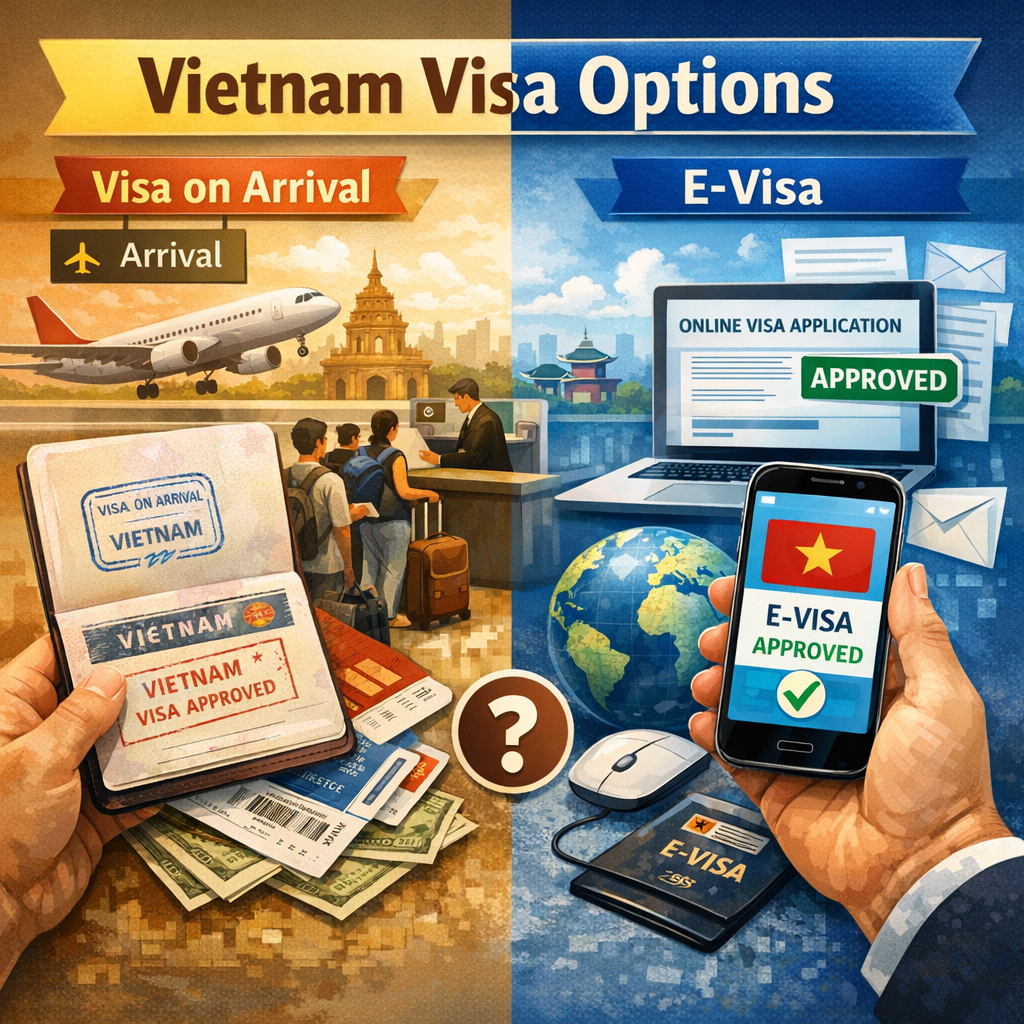
Before choosing the best route, it helps to know what each option actually means.
A Vietnam e-visa is an electronic visa you apply for online before departure. Once approved, you receive a digital visa document that you present when entering Vietnam. It is straightforward and designed for convenience.
A visa on arrival, on the other hand, is not something you simply get at the airport without preparation. Traditionally, travelers needed an approval letter in advance, then collected the visa after landing in Vietnam. It has often involved more paperwork, waiting time, and airport processing.
Because travel rules can change, the exact availability of each type may vary depending on nationality, port of entry, and current immigration policies. Still, for most travelers, the e-visa has become the more practical option.
Vietnam Visa: Why the E-Visa Is Usually Simpler
If your main goal is a smooth and low-stress experience, the e-visa is generally the better choice.
Here is why:
1. Everything is done before you travel
With an e-visa, you complete the process online from home. You fill out the application, upload the required documents, pay the fee, and wait for approval. Once it is granted, you are ready to travel.
This removes the uncertainty of landing in a new country and then standing in line to deal with immigration paperwork.
2. Less waiting at the airport
One of the biggest complaints about visa on arrival has always been the extra queue after landing. Travelers often need to wait at a visa counter before they can move on to passport control. After a long flight, this can feel exhausting.
An e-visa helps avoid that additional step. Since your visa is already approved, entry is usually faster and more efficient.
3. Clearer costs
E-visas typically involve a standard government fee paid during the online application. With visa on arrival, there may be multiple charges, including a service fee for the approval letter and a stamping fee upon arrival. This can make the total cost less transparent.
For travelers who want to budget accurately, e-visas are often easier to understand.
4. Better for independent travelers
If you are planning your own trip without using a travel agency, an e-visa is far more convenient. You do not need to coordinate airport paperwork or rely on a third party as much. It is a cleaner, more modern process.
How Visa on Arrival Works
Although many travelers still ask about visa on arrival, it is important to understand that it has never been as simple as just landing and receiving a visa instantly.
In most cases, the traditional process involved:
– Applying online through an agency or sponsor for an approval letter
– Receiving that approval letter before traveling
– Bringing printed documents, passport photos, and sometimes cash
– Waiting at the airport visa counter upon arrival
– Receiving the visa stamp before entering the country
This option was often popular when e-visas were more limited. However, it could be frustrating if there were delays, incorrect paperwork, or long airport lines.
Visa on arrival may still be useful in specific circumstances, especially for travelers with urgent needs, special entry requirements, or situations where an e-visa is not suitable. But for the average tourist, it is usually no longer the most convenient first choice.
Key Differences Between E-Visa and Visa on Arrival
To make the comparison easier, here are the main differences:
Application process
– E-visa: Fully online before departure
– Visa on arrival: Requires advance approval plus airport processing
Convenience
– E-visa: More convenient for most travelers
– Visa on arrival: More steps and more waiting
Airport time
– E-visa: Faster entry in many cases
– Visa on arrival: Extra queue after landing
Cost clarity
– E-visa: Usually simpler fee structure
– Visa on arrival: May include separate service and stamping fees
Best for
– E-visa: Tourists, short-term visitors, and independent travelers
– Visa on arrival: Certain special cases or travelers needing alternative arrangements
Who Should Choose an E-Visa?
An e-visa is usually ideal if you are:
– Traveling for tourism or short business purposes
– Planning your trip in advance
– Looking for the easiest and most predictable option
– Entering through an eligible checkpoint
– Wanting to minimize paperwork after arrival
For these travelers, the e-visa offers exactly what most people want: convenience, clarity, and less hassle.
Who Might Still Consider Visa on Arrival?
There are still a few situations where visa on arrival may be worth exploring:
– You have a last-minute travel situation and need an alternative solution
– Your specific visa type is not covered by the e-visa system
– You are working with a sponsor, company, or agency handling the process for you
– Your travel circumstances are unusual and require tailored support
Even then, it is important to verify the latest immigration rules before relying on this route.
Tips for a Smooth Vietnam Visa Application
No matter which option you choose, a few practical steps can help prevent delays:
Check your passport validity
Make sure your passport has enough validity remaining and blank pages if required.
Use official or trusted sources
Always confirm current visa rules through official government channels or reputable providers.
Double-check your details
A small mistake in your passport number, full name, or travel dates can cause major problems.
Apply early
Even if online processing seems quick, it is safer to apply well before your departure date.
Keep printed and digital copies
Having backups of your visa approval, passport information, and booking details can be very helpful.
Final Verdict: Which Option Is More Hassle-Free?
For most travelers, the e-visa is the best hassle-free option. It is easier to apply for, more transparent in cost, and far more convenient upon arrival. Instead of dealing with extra airport procedures, you can focus on enjoying your trip from the moment you land.
Visa on arrival still has a place in certain special situations, but it is no longer the simplest default option for the average visitor. If your goal is a smoother experience with fewer moving parts, the e-visa is usually the smarter choice.
Before booking your trip, check the latest entry rules and confirm which visa pathway matches your nationality and travel purpose. A little preparation can make your arrival in Vietnam much more relaxed and enjoyable.
Plan Your Vietnam Adventure
Discover our curated tours and airport services for a seamless travel experience.