Vietnam Like a Local 2 Weeks: Must-Have Authentic Travel Guide

Vietnam Like a Local 2 Weeks: Must-Have Authentic Travel Guide
Vietnam like a local is less about racing from one landmark to the next and more about slowing down enough to notice the rhythm of daily life. In two weeks, you can eat where office workers eat, sip coffee on tiny plastic stools, wake up in fishing towns, ride through mountain passes, and spend evenings in neighborhoods where families gather on the sidewalk. This kind of trip is not about checking off the most famous sights—it is about understanding how Vietnam feels.
Why Two Weeks Is Ideal for an Authentic Vietnam Trip
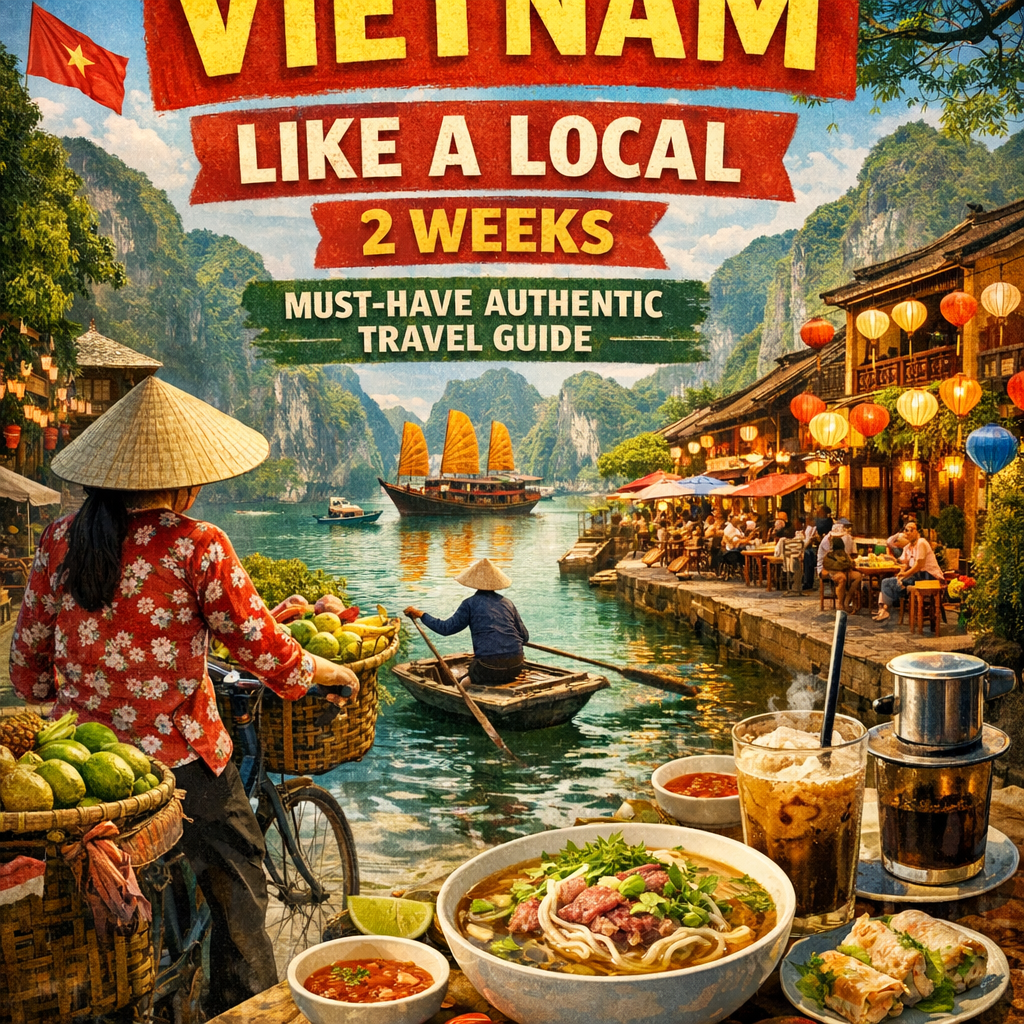
Two weeks gives you enough time to experience several regions without turning the journey into a blur. Vietnam is long and geographically diverse, so every stop offers something different: historic streets in the north, imperial heritage in the center, beach towns and mountain roads along the coast, and energetic river life in the south.
If you want a more local-style experience, avoid packing too many destinations into your itinerary. A good rule is to choose a few places and stay long enough to build a routine. Visit the morning market. Return to the same food stall. Walk the same street at different times of day. That is where the real travel memories begin.
A Smart 2-Week Route Through Vietnam
Here is a balanced route that combines culture, food, local transport, and regional variety:
Days 1–3: Hanoi
Start in the capital, where old-world charm meets nonstop street life. Hanoi is one of the best places to understand Vietnam through food and daily rituals. Wake early and visit Hoan Kiem Lake, where locals practice tai chi and walk in groups before work. Spend time in the Old Quarter, but wander beyond the busiest streets to find small tea shops, hidden courtyards, and neighborhood temples.
What to do like a local:
– Eat pho for breakfast
– Try bun cha for lunch
– Drink egg coffee in a small independent café
– Visit a wet market in the morning
– Sit at a bia hoi corner in the evening
Days 4–5: Ninh Binh
Just a few hours from Hanoi, Ninh Binh feels slower and greener. Limestone peaks rise out of rice fields, and riverboat rides take you past caves and temples. Stay in a homestay instead of a standard hotel if possible. This area is ideal for cycling, chatting with hosts, and enjoying quiet countryside mornings.
Local tip: go early to Trang An or Tam Coc to avoid crowds and see village life before day-trippers arrive.
Days 6–8: Hue
Fly or take an overnight train south to Hue, a city with deep historical character and a more relaxed pace. Hue is often overlooked by travelers rushing between major hotspots, which makes it especially rewarding for anyone seeking authenticity.
What to experience:
– A simple bowl of bun bo Hue
– Riverside walks near the Perfume River
– Local pagodas away from tour bus routes
– A family-run eatery serving central Vietnamese dishes
– Evening food stalls with regional specialties
Hue’s food is one of the strongest reasons to come. It is refined, bold, and deeply tied to local history.
Days 9–10: Da Nang and Hoi An Area
Da Nang gives you modern energy, wide beaches, and local seafood markets, while nearby Hoi An offers historic beauty and riverside charm. To keep the trip authentic, stay slightly outside the busiest core of Hoi An or split your time between both places.
In Da Nang:
– Visit local beaches at sunrise
– Eat seafood in simple open-air restaurants
– Explore neighborhood cafés instead of tourist-focused venues
In Hoi An:
– Rent a bicycle and ride into rice fields
– Visit local tailors and family workshops
– Explore side streets early in the morning
– Try cao lau and white rose dumplings
Days 11–14: Ho Chi Minh City and the Mekong Edge
Finish in the south, where life moves faster and the streets never seem to sleep. Ho Chi Minh City is energetic, entrepreneurial, and food-obsessed. To experience it well, balance famous areas with residential districts, markets, and alleyway cafés.
Spend one day exploring the city’s local neighborhoods, and if time allows, take a day trip toward the Mekong Delta for floating markets, fruit orchards, and riverside communities.
Don’t miss:
– Banh mi from a busy street cart
– Com tam for breakfast or lunch
– Strong iced coffee with condensed milk
– A local market in District 3 or Binh Thanh
– Small music cafés or rooftop bars with a local crowd
Vietnam Like a Local: How to Travel More Authentically
Authentic travel is not about pretending to be local. It is about being respectful, curious, and open to the country beyond the postcard version.
Stay in Family-Run Places
Homestays, guesthouses, and small boutique hotels often provide better insight than large chains. Hosts may recommend neighborhood restaurants, local events, or scenic routes you would not find online.
Eat Where the Turnover Is High
Busy food stalls with plastic stools, limited menus, and lots of local customers are often your best bet. Freshness matters, and popularity is usually a good sign.
Learn a Few Vietnamese Phrases
You do not need fluency, but simple phrases go a long way:
– Xin chào – Hello
– Cảm ơn – Thank you
– Bao nhiêu? – How much?
– Ngon quá – Very delicious
Even a small effort often leads to warmer interactions.
Travel Early
Vietnam wakes up early. Morning is the best time to see parks full of exercise groups, markets in full swing, and street vendors preparing breakfast. It is also cooler and more peaceful.
Use Everyday Transport
If you are comfortable, try trains, local taxis, ride-hailing apps, bicycles, or short bus rides. The journey itself often becomes part of the experience.
Food Experiences You Should Prioritize
Vietnamese cuisine changes significantly from north to south, and regional variation is one of the great joys of the trip.
North
Expect cleaner, subtler flavors and comforting noodle dishes. Hanoi is all about broth, herbs, grilled pork, and coffee culture.
Central
Food becomes spicier and more intense. Hue and the surrounding region are excellent for small plates, royal-influenced cuisine, and complex sauces.
South
The south leans sweeter and more abundant, with tropical ingredients, vibrant street snacks, and excellent rice dishes.
A useful tip: be adventurous, but not reckless. Choose places that look clean, are busy, and serve food fresh and hot.
Practical Tips for a Smoother 2-Week Journey
– Pack light: You will move more easily through stations, guesthouses, and city streets.
– Use domestic flights wisely: Vietnam is long, so flying one or two legs saves time.
– Carry cash: Many small eateries and local shops still prefer it.
– Dress modestly for temples: Lightweight clothing that covers shoulders and knees is a safe choice.
– Respect local pace: Smile, be patient, and avoid loud behavior in quiet neighborhoods.
– Cross streets calmly: Traffic can feel chaotic, but steady, predictable movement helps.
What Makes the Trip Memorable
The best parts of Vietnam often happen between planned activities: a bowl of noodles served in silence at dawn, a coffee shared while rain hits the pavement, a conversation with a host using half-English and half-gestures, or a scooter ride through streets lined with jasmine, grilled meat, and motorbike horns.
Two weeks is enough to see impressive places, but it is also enough to build a deeper connection if you travel with intention. Choose fewer stops, stay curious, eat boldly, and make room for unplanned moments. That is how the country reveals itself—not only as a destination, but as a living, breathing everyday world you are lucky enough to briefly join.
Plan Your Vietnam Adventure
Discover our curated tours and airport services for a seamless travel experience.