Ho Chi Minh City Top Attractions: Must-See Best Highlights
Ho Chi Minh City Top Attractions: Must-See Best Highlights
Ho Chi Minh City top attractions offer a vibrant mix of history, culture, architecture, food, and nonstop energy. Vietnam’s largest city is a place where elegant French colonial buildings stand beside modern skyscrapers, busy markets hum from sunrise to late night, and every street seems to tell a different story. Whether you are visiting for a weekend or planning a longer stay, the city delivers a rich experience that blends the past and present in unforgettable ways.
From major historical landmarks to local neighborhoods packed with character, this guide covers the best places to visit and what makes each one worth your time.
Why Travelers Love Ho Chi Minh City Top Attractions
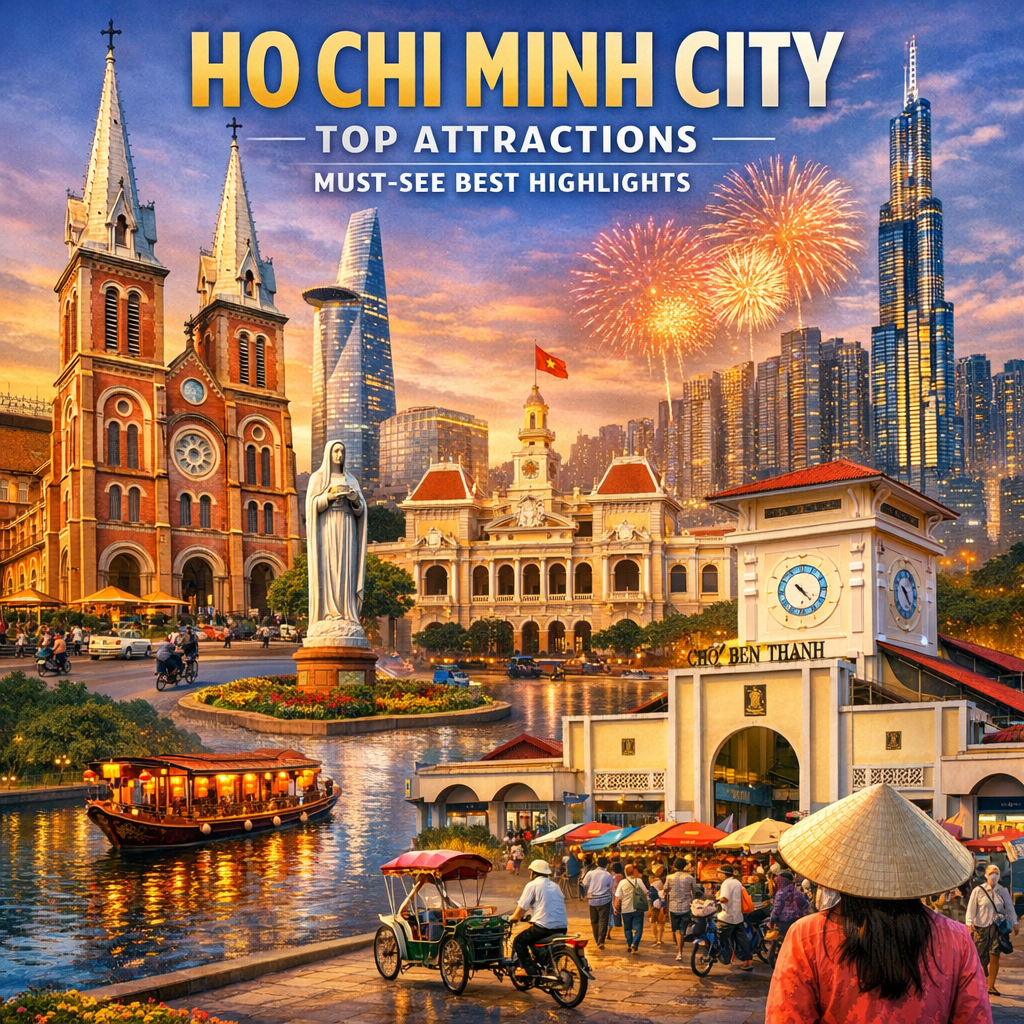
There is something uniquely captivating about this southern metropolis. It is fast-paced yet deeply rooted in tradition. One moment you may be sipping coffee in a stylish café, and the next you are walking through a museum that reflects the country’s complex history. The city’s appeal lies in its variety.
Travelers are drawn here for several reasons:
– Historic sites that reveal Vietnam’s colonial and wartime past
– Bustling markets full of food, souvenirs, and local life
– Beautiful temples and pagodas that offer calm amid the chaos
– Rooftop bars, modern shopping centers, and contemporary art spaces
– Day trips that expand the experience beyond the city center
If you want a destination that feels lively, layered, and full of surprises, this city delivers.
Notre-Dame Cathedral and Central Post Office
One of the most iconic areas in the city center is where the Notre-Dame Cathedral Basilica of Saigon and the Central Post Office stand close together. These landmarks reflect the city’s French colonial heritage and remain among the most photographed places in town.
The cathedral, built with red bricks imported from France, creates a striking visual contrast against the surrounding modern development. Even when access inside is limited due to restoration work, the exterior alone is worth a visit.
Just steps away, the Central Post Office is another architectural highlight. Designed with classical European influence and a spacious, elegant interior, it is more than a functioning post office. It feels like stepping back into another era. Travelers often stop here to admire the vaulted ceiling, old maps, and charming details.
Ben Thanh Market
For many visitors, Ben Thanh Market is a classic stop and a lively introduction to local commerce. It is one of the city’s most famous markets and a great place to experience the atmosphere of everyday trade. Inside, you will find everything from textiles and handicrafts to coffee, spices, snacks, and souvenirs.
The market is also a good place to sample local dishes such as:
– Pho
– Banh xeo
– Fresh spring rolls
– Sweet Vietnamese desserts
– Iced coffee with condensed milk
Bargaining is common here, especially for non-food items, so a friendly smile and a little negotiation can go a long way.
War Remnants Museum
For those who want a deeper understanding of Vietnam’s modern history, the War Remnants Museum is one of the most important places to visit. Its exhibits are powerful, emotional, and often difficult, but they provide essential context about the Vietnam War and its lasting impact.
The museum includes photographs, military equipment, and detailed displays documenting the human consequences of conflict. It is not a light attraction, but it is a meaningful one. Many travelers leave with a stronger appreciation of the country’s resilience and the stories behind today’s Vietnam.
Reunification Palace
Reunification Palace, formerly the Presidential Palace, is another major historical site. This building played a central role in the end of the Vietnam War and remains preserved as a symbol of a pivotal moment in the nation’s history.
Walking through the palace feels like entering a time capsule. Visitors can explore meeting rooms, reception halls, private quarters, and even underground bunkers. The architecture itself is distinctive, combining modernist design with symbolic local elements. If you enjoy political history and preserved interiors, this stop is especially rewarding.
Jade Emperor Pagoda and Other Spiritual Sites
Amid the noise and movement of the city, Ho Chi Minh City also offers peaceful spiritual spaces. The Jade Emperor Pagoda is one of the most famous. Filled with incense, carved woodwork, statues, and atmospheric light, it offers a glimpse into local religious practice and traditional artistry.
Other temples and pagodas throughout the city are worth visiting as well, especially if you want to experience a quieter side of urban life. These sacred places can feel worlds away from the traffic outside and are ideal for slowing down your pace.
Nguyen Hue Walking Street and the Modern Cityscape
To see the city’s contemporary personality, head to Nguyen Hue Walking Street. This broad pedestrian boulevard is lined with hotels, cafés, restaurants, and modern buildings. It is especially lively in the evening, when locals and tourists come out for a stroll, photos, and street performances.
Nearby, the Bitexco Financial Tower adds a modern dimension to the skyline. Its observation deck offers sweeping views over the city, the Saigon River, and the dense urban landscape beyond. Visiting at sunset is particularly memorable, as the city lights begin to glow.
Cholon and Binh Tay Market
Cholon, the city’s Chinatown, offers a different cultural flavor and deserves a place on any well-rounded itinerary. This district is rich in Chinese-Vietnamese heritage, with ornate temples, traditional medicine shops, wholesale markets, and excellent food.
Binh Tay Market is one of the key landmarks in the area. Compared with some of the more tourist-focused spots in the center, it feels more local and practical. Exploring Cholon also gives visitors a better sense of the city’s cultural diversity and historical complexity.
Cu Chi Tunnels: A Popular Day Trip
Although located outside the urban center, the Cu Chi Tunnels are among the most visited experiences connected to the city. This vast underground tunnel network was used during wartime and offers insight into the strategies, conditions, and resilience of those who lived and fought there.
Guided tours often include demonstrations, historical explanations, and the chance to walk through sections of the tunnels. It is a fascinating excursion for visitors who want to complement city sightseeing with a broader historical perspective.
Best Tips for Exploring the City
To enjoy the highlights fully, keep a few practical tips in mind:
– Start early to avoid the hottest part of the day
– Use ride-hailing apps for convenient transport
– Wear light clothing and stay hydrated
– Carry cash for markets and small vendors
– Be cautious when crossing busy streets and move steadily
A mix of planned sightseeing and spontaneous wandering usually works best here. Some of the city’s most memorable moments happen between the major landmarks, whether it is finding a hidden café, trying street food on a plastic stool, or discovering a quiet alley full of local character.
Final Thoughts
This city rewards curious travelers with much more than a checklist of famous places. Its most memorable highlights come from the contrast between grand landmarks and everyday life, between difficult history and creative energy, and between old traditions and rapid change. If you explore with an open mind, you will leave with a far richer impression than any single attraction can offer.
From historic monuments and busy markets to pagodas, modern boulevards, and meaningful museums, the city presents a layered experience that is both exciting and deeply human. It is a destination that stays with you long after the trip ends.
Plan Your Vietnam Adventure
Discover our curated tours and airport services for a seamless travel experience.